

AI Detector: How to Spot Machine-Written Content and Keep Your Voice Human
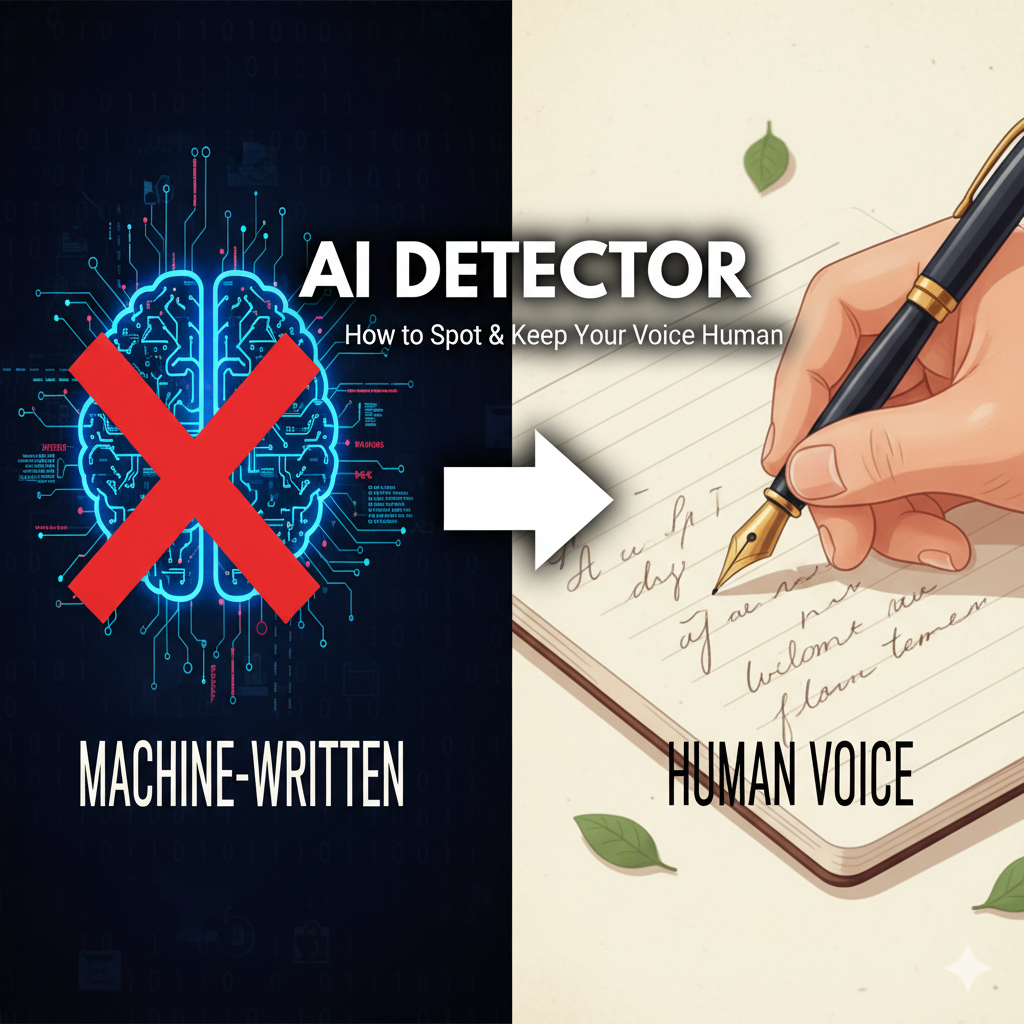
Machines write fast. People read more slowly. Somewhere between a bot’s output and a human’s intention sits the new challenge of authenticity — and the tool carving that space is the AI detector.
An AI detector is not a magic lie detector. Think of it as a stylistic X-ray: it examines structure, rhythm, and choice to decide whether an author was human, machine, or a hybrid. But the real story isn’t the score it returns — it’s what we do with that score.
Not just “human or machine”
Most conversations treat detection as a binary: human = good, machine = bad. That’s a narrow view. In practice, detection helps people make smarter decisions. A marketing team might accept an AI draft as a time-saver but use a detector to flag passages that need a personal anecdote. A teacher can identify where a student relied on an AI outline and guide them back to original thinking. In short: detectors help balance speed with soul.
How the detector actually works (in plain language)
Modern detectors don’t read “spelling mistakes” or “bad grammar” — they measure patterns. For example:
• Predictability — AI often chooses the statistically safest next word. That creates a polite, predictable cadence.
• Uniform tone — Machines can produce steady, neutral text; humans wobble between passion, doubt, and surprise.
• Idea jumps — Humans make associative leaps (a sandwich anecdote that turns into a policy point). Machines usually follow neat logic.
A detector converts these signals into a probability. High probability of machine generation doesn’t mean the content is useless — it just tells you how to edit with intention.
Use cases that matter (real, practical examples)
-
Small business website: An owner drafts service pages with an AI tool. The detector highlights sections where the voice sounds generic. The owner adds two sentences about a real customer and the page instantly feels trustworthy.
-
Journalism: Before publishing a guest column, an editor runs the draft through a detector, then requests sources and a short video from the contributor to verify authenticity.
-
HR & hiring: A recruiter screens cover letters. If the detector flags a formulaic tone, they ask for a short task that reveals candidate thinking.
What detectors don’t do — and why that matters
Detectors can’t read intent. They can’t judge ethics, nor can they tell whether a machine was used responsibly (e.g., for rapid research vs. full authorship). They’re diagnostic tools, not moral judges. Use them to inform your workflow, not to replace human judgment.
Make detectors work for you — a simple three-step playbook
-
Assess, don’t accuse. Treat a detection score as data, not a verdict.
-
Humanize the flagged parts. Add personal anecdotes, contradictory thoughts, or sensory detail — things machines struggle to invent.
-
Document your process. If your brand uses AI, say so. Transparency builds trust: “Drafted with AI, edited by our team” beats secrecy.
The long view: collaboration, not competition
The future isn’t “AI versus human.” It’s co-creation. As models get better, detection tools will pivot from policing to coaching — recommending where to inject emotion, flavor, or a personal detail. Think of detectors as the editor’s assistant: spotting potential, suggesting fixes, but leaving the final voice to you.
Closing thought
If your goal is authenticity, an AI detector is a compass, not a weapon. It highlights areas where your content may benefit from more human warmth or sharper thinking. Use it to amplify what machines can’t replicate: curiosity, doubt, and lived experience.
For More Blogs: Click Here

 English
 Arabic
 French
 Spanish
 Portuguese
 Deutsch
 Turkish
 Dutch
Dutch
 Italiano
 Russian
 Portuguese (Brazil)
 Greek
Greek