

Cloud Microservices Market Driven by DevOps and Containerization
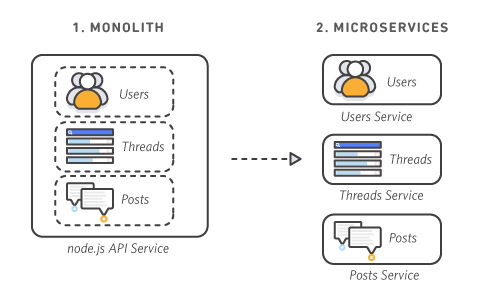
The Cloud Microservices Market Trends reflect evolving technology capabilities and development practices shaping future directions significantly. The Cloud microservices Market size is projected to grow USD 11.31 Billion by 2035, exhibiting a CAGR of 17.72% during the forecast period 2025-2035. Service mesh adoption emerges as dominant trend revolutionizing microservices communication through infrastructure-layer networking. Istio, Linkerd, and similar technologies enable sophisticated traffic management without application code modifications. Zero-trust security models implement mutual TLS authentication between services automatically and transparently. Observability integration provides distributed tracing and metrics collection across service mesh implementations. Traffic shaping capabilities enable canary deployments and A/B testing at infrastructure level. Rate limiting and circuit breaker patterns protect services from cascade failures systematically. Multi-cluster service mesh deployments enable consistent policies across hybrid cloud environments.
Serverless microservices trends emphasize event-driven architectures reducing infrastructure management overhead substantially. Function-as-a-service platforms execute microservices code without server provisioning or scaling concerns. Event sourcing patterns capture state changes enabling reactive microservices communication efficiently. Managed container services reduce operational complexity while maintaining deployment flexibility advantages. Cold start optimization enables serverless microservices meeting latency-sensitive application requirements. Hybrid approaches combine serverless functions with container-based services optimizing cost and performance.
Platform engineering trends establish internal developer platforms streamlining microservices development workflows. Golden paths provide opinionated approaches reducing developer cognitive load and decision fatigue. Self-service infrastructure provisioning empowers development teams while maintaining governance compliance. Template-based microservices scaffolding accelerates project initiation with organizational best practices embedded. Internal developer portals centralize documentation, APIs, and tooling improving developer experience comprehensively.
Edge microservices trends extend distributed architectures beyond central cloud locations strategically. Edge computing requirements demand lightweight microservices deployments closer to data sources. WebAssembly enables portable, secure microservices execution across cloud and edge environments. Kubernetes distributions optimized for edge enable consistent orchestration across distributed locations. Real-time processing requirements drive microservices deployment at network edge reducing latency.
Top Trending Reports -

 English
 French
 Spanish
 Portuguese
 Deutsch
 Turkish
 Dutch
Dutch
 Italiano
 Russian
 Romaian
 Portuguese (Brazil)
 Greek
Greek